From Gulf to Bihar: A Tax & Compliance Roadmap for Returning NRI Entrepreneurs
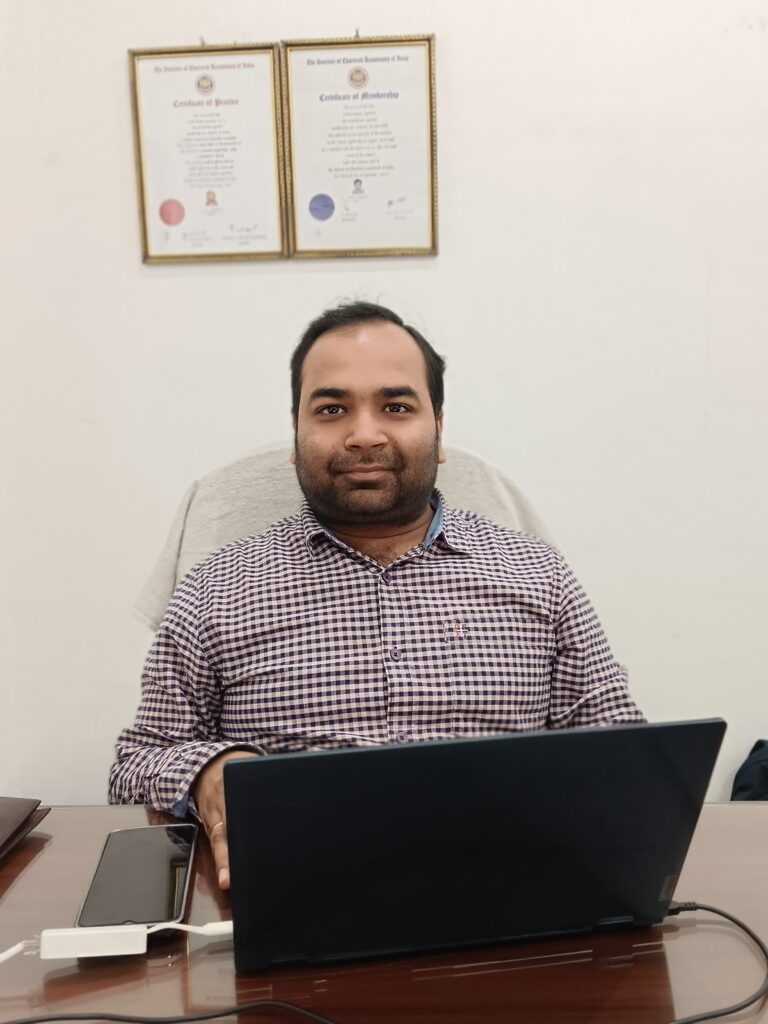
CA Vishal Agarwal
CA Vishal Agarwal is a highly skilled and dedicated Chartered Accountant with extensive expertise in Goods and Services Tax (GST). With years of experience in the field, he has established himself as a trusted advisor to businesses and individuals across multiple locations in Bihar. His deep understanding of GST regulations, compliance, and advisory services has helped numerous clients navigate the complexities of taxation with ease and confidence.
Returning Migrant Entrepreneurs in Bihar: A Compliance Roadmap From Gulf to Patna
A Patna CA’s step-by-step compliance roadmap for Bihar migrants returning from the Gulf, Maharashtra, or Kerala to start a business at home — covering residency, entity choice, registrations, and Tax Year 2026-27 filing.
Return migration is quietly reshaping Bihar’s small-business landscape. Every month I meet founders in Patna, Muzaffarpur, and Gaya who spent five to fifteen years in Dubai, Sharjah, Riyadh, Kerala, or Mumbai — and are now converting savings and skill into a shop, cloud kitchen, dairy unit, tuition centre, or trading business at home. The commercial idea is usually solid. The compliance stack is where most stumble in Year One.
Here is the roadmap I now run through with every returning migrant client.
Step 1 — Get financial residency right in the first ninety days
If you’re returning from the Gulf as an NRI, your NRE, NRO, and FCNR accounts must be converted the moment your residency status changes. NRE deposits can be redesignated as RFC (Resident Foreign Currency) accounts, which lets you continue holding foreign currency locally — a genuine advantage most returnees don’t know about. NRO accounts convert to ordinary resident accounts. Missing this window doesn’t disqualify you, but it invites FEMA questions later.
If you qualify for RNOR (Resident but Not Ordinarily Resident) status — typically for two tax years after return if you’ve been an NRI for nine of the previous ten years — your foreign income remains outside the Indian tax net during that period. This is the single most valuable planning window for a returning migrant, and it disappears quickly. Document your RNOR position in the first return you file.
Step 2 — Choose the right entity
For a first-time founder returning with ₹15–50 lakh, the honest choice is usually between:
Sole proprietorship — cheapest, fastest, minimal compliance, but limited credibility and no liability protection.
LLP — good middle ground, useful when there is a co-founder; audit only above ₹40 lakh turnover or ₹25 lakh capital contribution.
Private Limited — mandatory if you’re planning to raise capital, take on serious debt, or register under Bihar Startup Policy.
For a coaching centre, small trading business, or dairy unit, proprietorship or LLP is usually adequate. For an agritech, edtech, or logistics startup, go Pvt Ltd from day one — the DPIIT and SIPB recognitions we cover in Step 4 require it.
Step 3 — Build the registration stack
The minimum stack every returning migrant should complete in the first sixty days:
PAN verification and Aadhaar linkage (inoperative PAN under the Income-tax Act, 2025 will freeze your ability to open a current account).
GST registration if turnover will cross ₹40 lakh (goods) or ₹20 lakh (services), or immediately if you’re doing inter-state supply.
Shops & Establishments registration under the Bihar Shops and Establishments Act.
Udyam registration — free, takes ten minutes, unlocks priority sector credit and Section 43B(h) equivalent protection.
Professional Tax enrolment if applicable.
Bank current account with clean KYC and Udyam number linked.
Step 4 — Use the state schemes actively
Bihar has more startup incentives than most returnees realise. If your business fits the sector list, stack:
DPIIT Startup India recognition (central) — unlocks the tax holiday under the Income-tax Act, 2025’s successor to Section 80-IAC.
SIPB registration (state) — unlocks the Bihar Startup Fund seed grant of up to ₹10 lakh, interest-free loan up to ₹15 lakh, and monthly sustenance allowance for 12 months.
Women-led business scheme (state) — additional grants if the returning migrant is female or the entity is majority women-owned.
Central + state recognition is a two-week paperwork exercise. The financial upside is real.
Step 5 — Build the Tax Year 2026-27 filing rhythm early
Under the Income-tax Act, 2025, you will file your first return as a resident (or RNOR) covering income from the return date onward. Key discipline for Year One:
Track foreign account balances for Schedule FA disclosure — the Black Money Act penalty for non-disclosure is 300% of tax.
Advance tax quarterly if you expect profit — first instalment 15 June.
TDS registration and Section 392 salary TDS setup if you hire even one employee.
Section 393 TDS on rent, professional fees, and contractor payments — miss this and you lose the deduction.
The five mistakes I see most
Continuing to operate on the NRE account after return — creates FEMA questions and blocks legitimate remittances.
Not documenting RNOR status in the first return — losing a two-year tax-planning window worth lakhs.
Missing Schedule FA disclosure of foreign accounts in the first resident return.
Registering as Pvt Ltd without needing to — inflating compliance cost 3–4× unnecessarily.
Skipping Udyam because it “seems bureaucratic” — leaving priority-sector credit, MSME payment protection, and public procurement access on the table.
If you are returning to Bihar and building something, get the compliance stack right in the first ninety days. It is cheaper and cleaner than fixing it in Year Three.
Disclaimer
The material presented on this blog is intended solely for informational purposes. The opinions expressed here are solely those of the respective authors and do not necessarily reflect the views of Fintrac Advisors. No warranties are made regarding the completeness, reliability, or accuracy of this information. Any actions taken based on the information presented in this blog are solely at the reader’s risk, and we will not be liable for any losses or damages resulting from its use. Seeking professional expertise for such matters is strongly recommended. External links on this blog may direct users to third-party sites beyond our control. We do not take responsibility for their nature, content, or availability.
For any clarifications or queries, please feel free to reach out to us at: admin@fintracadvisors.com