Bihar Startup Fund 2026: A Practical Guide to Eligibility, Disbursement and Avoiding Rejection
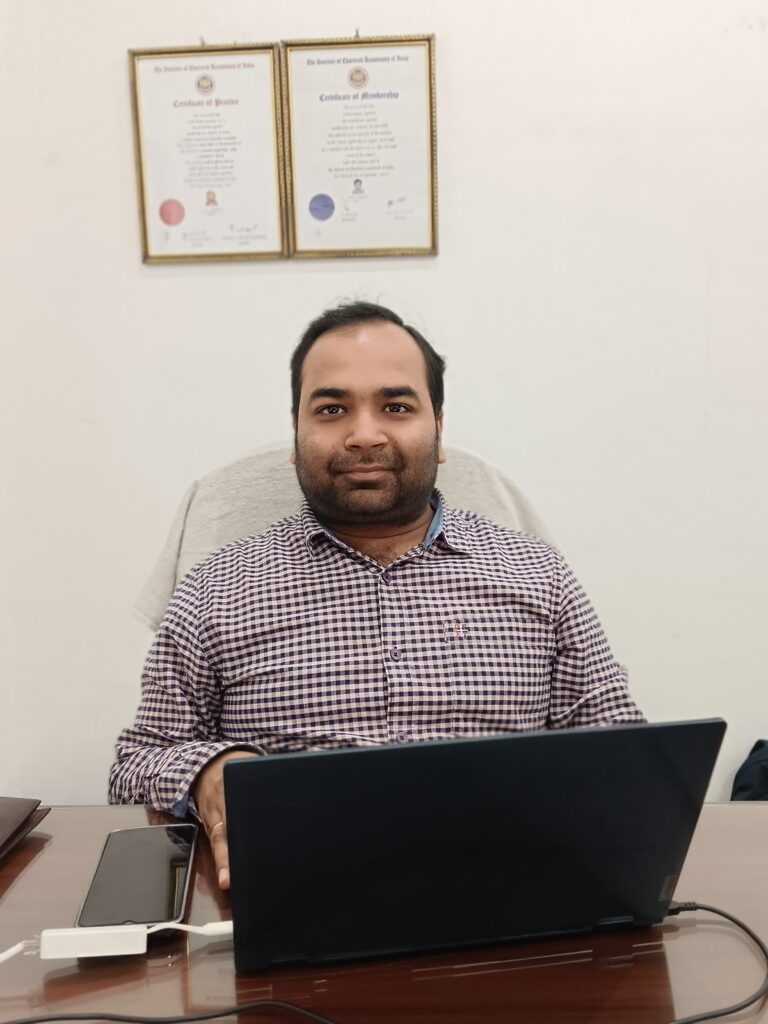
CA Vishal Agarwal
CA Vishal Agarwal is a highly skilled and dedicated Chartered Accountant with extensive expertise in Goods and Services Tax (GST). With years of experience in the field, he has established himself as a trusted advisor to businesses and individuals across multiple locations in Bihar. His deep understanding of GST regulations, compliance, and advisory services has helped numerous clients navigate the complexities of taxation with ease and confidence.
Bihar Startup Fund Disbursement in 2026: A Founder’s Practical Timeline
A step-by-step timeline for accessing the Bihar Startup Fund in 2026 — from SIPB registration to seed grant disbursement, with common rejection patterns Patna founders should avoid.
The Bihar Startup Fund (BSF) is one of the most under-utilised state startup incentives in India. Every quarter, dozens of Patna founders ask whether it is “real” or just paperwork. The honest answer: it is real, disbursed, and worth the effort — but the process is procedural and rejections are common at specific stages. Here is the timeline that works in 2026, based on recent cases we have walked through.
What the Bihar Startup Fund actually offers
Under the Bihar Startup Policy (2022, revised subsequently), a recognised startup can access:
Seed grant up to ₹10 lakh (staged, milestone-linked).
Interest-free loan up to ₹15 lakh (repayable over ten years, no interest, no collateral).
Sustenance allowance of ₹10,000 per month for 12 months for the founder(s).
Lease rental reimbursement for co-working or incubator space.
Patent reimbursement for domestic and international filings.
Marketing assistance for participation in national exhibitions.
Total maximum stack value: typically ₹30–35 lakh across cash and reimbursements over 24–36 months. That is meaningful capital for an early-stage Patna founder.
Month 0 to Month 1 — Eligibility gate
Two registrations are non-negotiable prerequisites:
DPIIT (Startup India) recognition — free, online; requires incorporation certificate, business plan, incorporation date within ten years, and turnover under ₹100 crore.
SIPB (Startup Investment Promotion Board) registration — Bihar-specific, via the SIPB portal. Requires DPIIT recognition, physical address in Bihar, and Bihar-domiciled promoter(s).
If either of these is missing, do not apply — the file will bounce back at the first screening.
Month 1 to Month 2 — The BSF application
The BSF application on the SIPB portal requires:
Business plan (typically 15–25 pages, standard sections).
Utilisation plan for the grant (specific budget heads).
This is the stage where most rejections originate. Applications get bounced back for vague market sizing, weak unit economics, or absence of any traction indicator. A single paying customer, letter of intent, or waitlist counts as traction and materially helps.
Month 2 to Month 4 — Selection and pitch
Shortlisted applicants are called to pitch before the SIPB selection committee at the Department of Industries office in Patna. The committee typically includes senior state officials, industry representatives, and often one academic. Pitches are usually 10 minutes plus 15 minutes of questions.
Three things the committee consistently probes:
Why Bihar? (What is the local economic contribution?)
Why now? (Why does this venture need this capital in this window?)
What happens if the grant is not received? (Tests genuine need vs. opportunism.)
Prepare crisp, honest answers. Committee members have seen enough pitches to detect rehearsed evasion.
Month 4 to Month 6 — Disbursement of first tranche
On selection, the first tranche of the seed grant (typically 30–40% of sanctioned amount) is released against a signed agreement and utilisation certificate for the initial phase. Subsequent tranches are milestone-linked: proof of hiring, product launch, customer acquisition, or infrastructure setup.
The loan component (if opted for) is released separately, usually after the first seed tranche demonstrates deployment discipline.
Month 6 onward — Compliance and reporting
Post-disbursement compliance is where founders lose future tranches:
Quarterly progress reports with expenditure statements.
Annual utilisation certificate.
Financial audit for the funded period.
Mandatory branding acknowledgement of “Supported by Bihar Startup Fund” in marketing collateral.
Skipping reports does not just delay the next tranche — it can trigger recovery notices.
The five most common rejection patterns
Vague market sizing — top-down TAM estimates without bottom-up validation.
No demonstrable traction — not even a pilot customer or MOU.
Weak unit economics — CAC unclear, margin structure unstated.
Promoter background gaps — no explanation of why this team can execute.
Utilisation plan without specificity — “hiring and marketing” without headcount, salary, or channel breakdown.
Closing action list for a Patna founder considering BSF
Get DPIIT and SIPB done first — no shortcuts.
Show at least one paying customer or LOI before applying.
Build a 15-slide pitch that answers the three committee questions directly.
Line up utilisation plan by specific budget heads before applying.
Assume 4–6 months from application to first tranche — plan cash accordingly.
BSF works. Founders who treat it like a real capital-raise — with the same discipline as a private round — get it. Founders who treat it like a form-filling exercise do not.
Disclaimer
The material presented on this blog is intended solely for informational purposes. The opinions expressed here are solely those of the respective authors and do not necessarily reflect the views of Fintrac Advisors. No warranties are made regarding the completeness, reliability, or accuracy of this information. Any actions taken based on the information presented in this blog are solely at the reader’s risk, and we will not be liable for any losses or damages resulting from its use. Seeking professional expertise for such matters is strongly recommended. External links on this blog may direct users to third-party sites beyond our control. We do not take responsibility for their nature, content, or availability.
For any clarifications or queries, please feel free to reach out to us at: admin@fintracadvisors.com