

Comprehensive Guide: Setting Up a Business in Russia
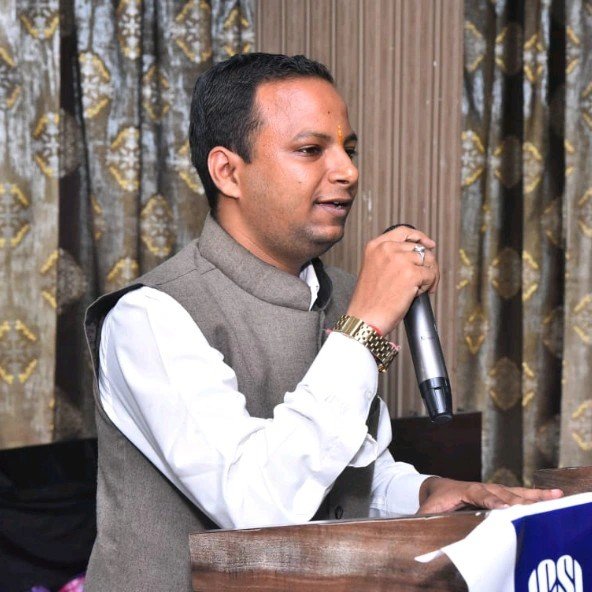
Lekhak Agarwal
Lekhak Agarwal is a dynamic professional, educator, and writer from Beawar, Rajasthan. A qualified Company Secretary (CS) and Cost & Management Accountant (CMA), he brings a rich blend of academic excellence and global experience. He holds multiple postgraduate degrees and international diplomas, along with a prestigious certification in Strategic Management from the UK. Professionally, he serves as Senior Manager – Cost and Audit at SBA Group, Jaipur, advising clients on global trade, finance, and strategy. As the founder of “The Visionary Stars,” he mentors thousands of students and young professionals. A passionate writer, Lekhak regularly shares insights on finance, economics, and policy through his articles and blogs.
Russia, situated at the intersection of Europe and Asia, presents unique opportunities for global entrepreneurs and businesses. With abundant natural resources, a skilled workforce, and a strong push towards digitization, Russia remains a compelling destination for business expansion, despite its regulatory challenges and geopolitical landscape. This guide provides a comprehensive overview of how to start and run a business in Russia, tailored for international founders.
1. Introduction to the Russian Business Environment
Russia is the world’s largest country by landmass, offering a vast consumer base and a diversified economy. Foreign investors can benefit from:
a. A strategic location linking Europe and Asia
b. A growing domestic market, especially in urban centers
c. Increasing government support for local production and innovation
However, navigating Russian bureaucracy, tax compliance, and legal systems demands thorough preparation.
2. Understanding the Russian Economy
Key Economic Highlights:
a. GDP Rank: 11th globally (based on nominal Gross Domestic Product)
b. Population: Over 140 million
c. Currency: Russian Ruble (RUB)
Major Sectors:
a. Energy (oil & gas)
b. Agriculture & food processing
c. Manufacturing
d. IT & digital services
e. Retail & e-commerce
f. Banking & fintech
Current Trends:
a. Focus on import substitution
b. Expansion of local manufacturing
c. Growth in digital technologies and AI
d. Heightened state involvement in strategic sectors
Note: Be aware of international sanctions, particularly those related to U.S. dollar and euro transactions, as well as high-tech equipment.
3. Choosing the Right Business Structure
3.1 Limited Liability Company (LLC / OOO)
a. Most popular structure for foreign businesses
b. Charter capital: RUB 10,000 (~USD 130)
c. Liability is limited to charter capital
d. Up to 50 founders (individuals or entities)
e. Ideal for: SMEs, trading, services
3.2 Joint Stock Company (JSC / AO)
a. Private (CJSC) or Public (PJSC)
b. Public JSC can issue shares to the public
c. Higher capital requirement: RUB 100,000 for public companies
d. Suitable for large-scale enterprises, investment ventures
3.3 Partnerships
a. General Partnership: Unlimited liability for all partners
b. Limited Partnership: Mix of limited and general liability partners
c. Less common among foreign investors
3.4 Branch & Representative Office
a. No separate legal entity status
b. Branch: Can conduct business operations
c. Rep Office: Marketing & liaison only
d. Requires accreditation, not incorporation
4. How to Register a Company in Russia: Step-by-Step
4.1 Pre-Registration Planning
a. Choose legal structure (LLC recommended)
b. Identify founders and shareholders
c. Draft business scope and licensing needs
d. Arrange for a legal address (mandatory)
4.2 Name Reservation & Legal Address
a. The name must be in Russian (it may include a foreign language version).
b. Legal address proof (lease agreement or virtual office)
4.3 Documentation
a. Charter (i.e., Articles of Association)
b. Founders’ resolutions & director appointments
c. Notarized & translated foreign documents
d. Power of attorney (if applicable)
4.4 Filing with the Federal Tax Service (FTS)
a. Submit registration application with documents
b. Timeline: 5–7 business days
4.5 Post-Approval Documents
a. OGRN: Main registration number
b. INN: Tax ID
c. KPP: Regional code
d. Extract from Unified State Register (EGRUL)
4.6 Bank Account Opening
a. Temporary account to deposit charter capital (for JSC)
b. Permanent account post-registration
c. AML & compliance checks apply
4.7 Company Seal (Optional)
a. Not legally required, but commonly used
4.8 Additional Licenses & Permits
a. Industries like food, education, and financial services require sector-specific licenses
5. Estimated Timelines
3–5 weeks for the complete incorporation process, assuming there are no errors or delays
6. Post-Incorporation Compliance
6.1 Accounting & Taxation
a. Annual accounts are mandatory for all companies
b. VAT Returns: Quarterly
c. Corporate Tax: Advance payments + annual return
d. Digital bookkeeping via software like 1C Accounting
6.2 HR & Payroll Compliance
a. Employment contracts are compulsory
b. Employer contributions:
c. Pension: 22%
d. Medical: 5.1%
e. Social Insurance: 2.9%
f. Work permits are required for foreign employees.
6.3 Industry-Specific Reporting
a. Financial, healthcare, and data handling firms may face additional reporting
7. Banking System in Russia
|
Bank |
Type |
Specialty |
|
Sberbank |
State-owned |
General banking, digital |
|
VTB Bank |
State-owned |
Corporate & investment banking |
|
Alfa-Bank |
Private |
SME & digital services |
|
Tinkoff Bank |
Digital-only |
Virtual banking |
|
Tochka Bank |
Digital-focused |
Startups & entrepreneurs |
Note: Digital banks may require Russian tax residency & local mobile number.
8. Corporate Taxation Overview
|
Tax |
Rate/Notes |
|
Corporate Tax |
20% (15% to federal, 5% to regional) |
|
VAT |
20% standard, 10% reduced, some exemptions |
|
Payroll Tax |
~30.2% (employer contributions) |
|
Property Tax |
Up to 2.2%, based on cadastral value |
|
Withholding Tax |
15% dividends; 20% on interest/royalties |
Small businesses can opt for the Simplified Tax System (STS):
a. 6% of revenue or 15% of profits
9. Legal Contracts and Disputes
a. Governed by the Russian Civil Code
b. Contracts can be in Russian or bilingual
c. Disputes handled by:
- State Arbitrazh Courts
- International Arbitration Tribunals
d. Ensure that contracts include force majeure clauses and locally relevant terms.
10. Foreign Investment Guidelines
a. Equal rights protection under Russian law
b. Restricted sectors: defense, media, strategic industries
c. Currency controls apply to above-threshold transactions
d. Profit repatriation allowed with reporting & tax compliance
11. Employing Staff in Russia
a. Written employment contracts are mandatory.
b. Standard workweek: 40 hours
c. 28 days annual leave
d. Trial periods: Max 3 months
e. Termination rules are strictly regulated
12. Real Estate & Property Laws
a. Foreigners may own commercial property (with limitations)
b. Leasing is common for office, retail, and industrial spaces
c. All long-term leases and ownership must be registered with Rosreestr
13. Intellectual Property Rights
a. IP types: Patents, trademarks, copyrights, trade secrets
b. Rospatent handles registrations
c. Russia follows international treaties like the Paris Convention and TRIPS
14. Import/Export & Customs
a. Regulated under the Eurasian Economic Union (EAEU)
b. Electronic customs clearance is available
c. Certain goods require special licenses
d. Sanctions may limit the export of dual-use goods or strategic items
15. Challenges & Opportunities
Challenges:
a. Bureaucratic red tape
b. Geopolitical risks and sanctions
c. Cultural and linguistic barriers
d. Regulatory unpredictability
Opportunities:
a. Massive domestic market
b. Demand for modern technologies and localized production
c. The booming digital economy and fintech
d. Gaps in supply chains ripe for innovation
Final Words & Disclaimer
Establishing a business in Russia offers immense potential—but also requires a deep understanding of local laws, compliance, and cultural norms.
Before proceeding, it is highly advisable to consult qualified legal, tax, and accounting professionals to ensure sector-specific and up-to-date guidance.
Disclaimer:
This blog post provides a structured overview for informational purposes only. Regulatory frameworks are subject to change. Readers are encouraged to conduct professional due diligence before making any business commitments.
For any clarifications or queries, please feel free to reach out to us at admin@fintracadvisors.com
Disclaimer
The content published on this blog is for informational purposes only. The opinions expressed here are solely those of the respective authors and do not necessarily reflect the views of Fintrac Advisors. No warranties are made regarding this information’s completeness, reliability, or accuracy. Any action taken based on the information presented in this blog is strictly at the reader’s own risk, and we will not be liable for any losses or damages resulting from its use. It is recommended that professional expertise be sought for such matters. External links on this blog may direct users to third-party sites beyond our control. We do not take responsibility for their nature, content, or availability.